Bullying comes in many forms. When I was a young child and young adult there were mainly two types of bullying; physical and mental. The physical bullying usually occurred when a bigger or stronger student picked on a weaker one. The mental bullying involved the use verbal insults, threats and intimidation. Although the mental bullying did not leave physical bruises or scars, the psychological trauma often hurt the victim worse than any physical confrontations. However in the 1970s and 80s, a child's home always provided a safe haven for those that had to endure any type of bullying. Things have changed a lot since those days. Now bullies can use modern technology to as a means to harass others 24/7. Cyber bullying can happen via sms texts, chat rooms, social networks, blog posts, etc. Although the word "cyber bullying" sounds ridiculous, it's very nature is quite serious. I found articles about how this type of harassment has driven minors and young adults to suicide. I've included the following link on how children can help protect themselves: 10 Ways to Protect Your Children From Cyber Bullying. The one thing that this article did not mention was that although victims can not always escape harassment, they can take steps in protecting themselves. It is important that the person being harassed keep all electronic evidence such as threatening sms texts and emails. This evidence can be very useful in tracking down the culprit, and bringing them to justice. Each sms and email contains code similar to an IP address that authorities can use to trace to the source of the threat. Laws are starting to be drafted in many states in America and other countries to help discourage cyber bullying. However, sometimes the best defence is a good offense. Teachers and parents need to educate children on how to protect themselves against cyber bullies. This includes keeping personal data such as user names and passwords confidential, and reminding children anytime they send a message or picture to someone it can very well come back to haunt them in the future.
Have you heard Pink Floyd's song "Time"? Unfortunately this song got me into deep trouble when I was only 12 years-old. My English teacher at the time had assigned us students to write 3 different types of poems. We were required to write one haiku, one cinquain, and one free verse. I struggled with writer's block and procrastination, but managed to complete the haiku and cinquain before class ended. The teacher allowed us to complete any unfinished work as homework that night. However, at that age I was far more interested in playing basketball after school with my friends. It wasn't until I was eating breakfast the next morning that I suddenly remembered I still needed to complete the free verse poem before my first class of the day. My older brother happened to be playing one his favorite Pink Floyd albums as I munched on my Captin Crunch. The song that was playing on his record player was"Time". I found the lyrics mesmerizing and the music hypnotic. It was ironic that the song was about time since it was the essential thing that I lacked. In one fell swoop I made the terrible decision to plagiarize the following lyrics: "Ticking away the moments that make up the dull day. You fritter and waste the hours in an off hand way. Kicking around on a piece of ground in your hometown, waiting for someone or something to show you the way. Tired of laying in the sunshine, staying home to watch the rain. You are young and life is long, and there is time to kill today. Then one day you find, ten years have got behind you. No one told you when to run. You missed the starting gun." To me it sounded like the perfect free verse poem and I didn't fear that my teacher would know it wasn't my own work. I figured she was too old to listen to Pink Floyd. With a bit of guilt for cheating, and a bit of a sense of relief for completing the assignment I handed it in when I entered the class room. The next day we received our poems back. The haiku and cinquain were marked with corrections and suggestions. The free verse only had the words "please see me" written at the top. After class I trudged towards my teacher's desk with thoughts of possible expulsion running through my head. To my surprise the teacher informed me that she was delighted with my "Time" poem. In fact she said she was so impressed that she would like my permission to enter it in a poetry contest. My relief quickly turned to fear. It was one thing to fool a teacher, it was another thing to fool the other people. She quickly added that I could have a day to think it over. That night I did not get much sleep as I played many scenarios though my head. By morning I knew that I had to come clean. I made an effort to arrive extra early at school in order to talk with my teacher before class began. I took a deep breath and swallowed hard as I approached her desk. I then told her the truth about plagiarizing the lyrics of the song. It was quite scary yet cathartic for me to tell the truth. However, she seemed unfazed by my confession. She simply and calmly said that she appreciated my honesty, but that she was deeply disappointed and that in addition to informing my parents about the situation I would receive an F for the assignment. In hindsight it is obvious that the teacher knew that it was not my work and was just giving me an opportunity to admit it. It was a lesson that I will never forget and that I often share with my students to try to discourage plagiarism on all levels. That incident took place over 20 years ago. Today it is very far easier for someone to steal other's work by simply clicking their mouse a few times to copy/cut/paste or download a picture or song illegally. However, just because something is easy or even prevalent (in the case of illegal downloads through programs such as Napster) does not make it right. Checking for plagiarism has also become much easier with sites such as Plagiarism Checker.Com. Copyright laws were first written to not only protect the intellectual property of the author, but also to promote academics. At some point they have become something to fear in more litigious societies such as America. Copyright laws vary from country to country, and in many cases they are open to interpretation. In Thailand there is a lot of leeway for educators to use copy written material for educational purposes. However, that should in no way be interpreted that teachers have carte blanche when it comes to this issue. We need to ask ourselves if using other people's work without permission is truly necessary and morally responsible. Fortunately there is plenty of access to great resources that fall under the Public Domain category. There is also an emerging gray area which falls between copy right and free domain. Take a look at Creative Commons to find information and resources in the gray area. Copy written material may be used if it passes the Fair Use test. According to copyrightarticle on Wikipedia, the following 4 factors to be considered if copyrighted materials can be used:
the purpose and character of the use, including whether such use is of a commercial nature or is for nonprofit educational purposes;
the nature of the copyrighted work;
the amount and substantially of the portion used in relation to the copyrighted work as a whole; and
the effect of the use upon the potential market for or value of the copyrighted work.
Is there such a thing as privacy online? Although I would like to think that there is privacy online, I am very skeptical. We can control what others see of our own habits and private lives by responsibly managing our "footprints" that we leave behind on such things as Blogs, FaceBook, Chats, and other social networks. However, many Internet Service Providers can be legally obligated to provide personal information such as search queries upon a government or a governmental agency request. In some countries, the ISPs are obligated to keep records up a specific number of days on all users. I am not aware of such laws in America. However, in America and Europe there have been murder convictions in which internet search histories were called into evidence for prosecution. From my readings, these particular convictions were appropriate, and the seeking of appropriate justice outweighed these criminal's loss of privacy. The criminals thought that by simply clearing their browser history on their computer, it would delete any record of them visiting a particular site. However, the investigators simply used the suspects computer IP address and cookies to reference with popular search engines. So can we expect and should we expect privacy while online? I believe that most users want and expect privacy. There has been a concern that some providers and search engines will sale search histories to the highest bidder. Perhaps an insurance company would be interested in your habits or interests. Read
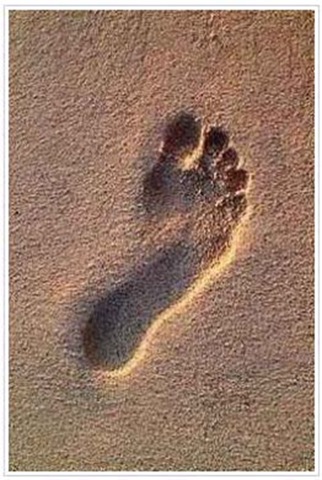
There is the saying "No matter where you go, there you are." Now that we leave "digital footprints" of our lives on the Internet we can just as easily say, "No matter where you've been, there you Still are." Social Networks such as My Space, Face Books, Chat Rooms are increasingly becoming part of the web landscape. Although there are huge benefits to be able to network with a global community to share ideas, information, ask questions, and show case accomplishments, etc., there is also an increased chance that you may potentially leave behind a "footprint" that you may regret in the future. Many employers are now using the web to search for information about perspective employees. So what can you do about embarrassing photos or comments about yourself posted on the web? The first step is to search the web and look into your own digital footprint. You need to see what kind of information about yourself is public. You should then make an effort to clean up your online profile of anything that might be potentially embarrassing or offensive. Most of the time you can do this without assistance. However, there is an emerging market of "cleaners", such as Reputation Defenderand Reputation Hawk, that can assist you for a fee. You may also want to take steps to improve your profile by leaving "footprints" that highlight your positive traits and successes. The easiest way to avoid having to do a cleaning session is to always manage your Internet profile in responsible manner. A good rule of thumb might be "Think Twice, Post Once". Teachers and parents have the responsibility to educate children on how to effectively manage their "footprints". In my experience, I believe that conversations and explicit lessons can begin to take place at school and at home with children as young as 8 years old. That seems to be the age where many school age children (fortunate enough to have access to the Internet) start using applications such as Blogs and Chat Rooms at home and school. The use of these applications allow for those "teachable moments" about topics such as cyber bullying, online privacy, and digital footprints.